Matt Singer
'Parker' is not Jason Statham's best movie, but it may have his defining onscreen moment, a perfect, succinct summation of everything pleasurable about his onscreen persona. His character, a thief and con man named Parker, has returned to his hotel room in Palm Beach. He's surprised by an assassin; since this is a Jason Statham movie, an elaborately choreographed fight scene ensues.
The assassin's weapon of choice is a knife and after he gets Parker in a headlock, he tries really hard to get Statham's face acquainted with the finer points of his blade. The knife keeps inching closer and closer to his eyeball -- so to save himself, Parker sticks up his hand and willingly lets the assassin stab him through his palm. The sacrifice gives him just enough of breather to gain the upper hand. That is The Cinema of Jason Statham in a nutshell: action and indomitable determination. His characters are all men who'll stop at nothing to win; an echo of Statham's onscreen work ethic -- he'll stop at nothing to entertain you. Even in a vehicle as average as "Parker," Statham still delivers an intensely committed performance.
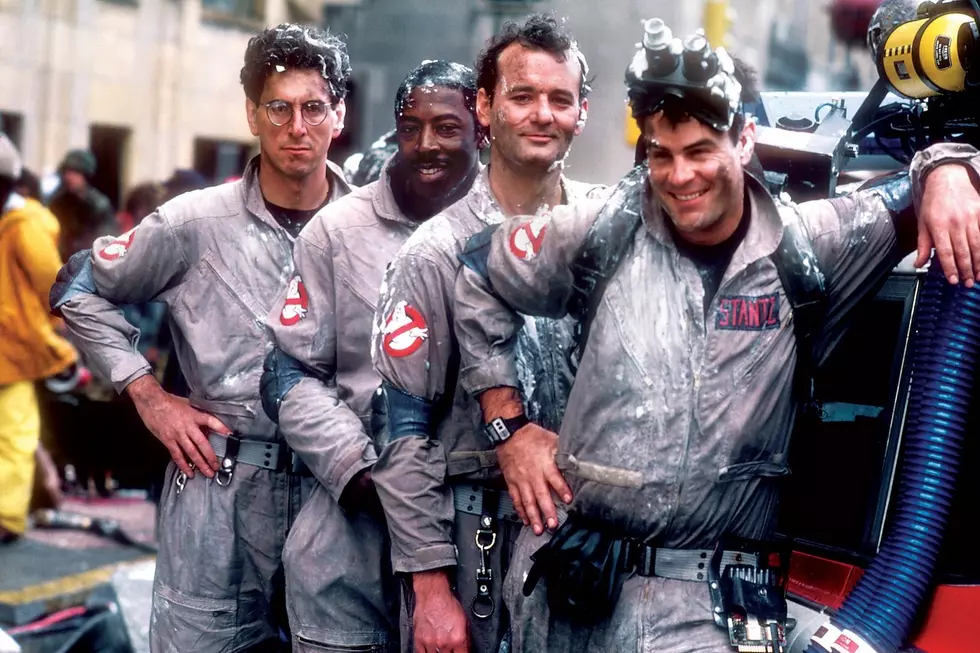
You don't have to be on drugs to enjoy 'John Dies at the End' -- I wasn't and I did -- but it certainly wouldn't hurt. Its frenzied, cockeyed logic, brain-twisting philosophical discussions, and bargain basement psychedelic special effects would all look better high. 'John Dies at the End' is kind of like 'Ghostbusters' if 'Ghostbusters' was about a pair of slackers who take weird drugs to see and kill ghosts rather than a bunch of Columbia University scientists. Through their extensive use of a mysterious and possibly sentient substance known as "Soy Sauce," Dave (Chase Williamson) and John (Rob Mayes) are able to see into the future, the past, and alternate universes, and even to commune with the dead. They occasionally save the world, pharmacological stupors permitting.
In his recent autobiography, Arnold Schwarzenegger describes his part in 'The Last Stand' as "a great, great role." He plays Ray Owens, a former LAPD cop who retired to his hometown in Arizona after his partner got crippled in a botched drug raid. Now the local sheriff, he and a few bumbling deputies are all that stands between the Mexican border and a ruthless drug kingpin. "The sheriff knows if he succeeds," Schwarzenegger writes, "it will mean everything to the town. His reputation is on the line. Is he really over the hill or can he do it?"
Dirty Harry would love 'Gangster Squad,' a movie about cops who operate so far outside the law they make Clint Eastwood's signature detective look like a pencil-pushing dweeb. Assembled by LAPD police chief Bill Parker (Nick Nolte), and supposedly inspired by a true story, the members of the so-called Gangster Squad operate as judge, jury, and executioners. They don't arrest their targets; they "wage war" against their enemy, mob boss Mickey Cohen (Sean Penn). In their quest to bust up Cohen's rackets, the Gangster Squad brandishes about a billion guns and not a single badge. Hell, even Dirty Harry waited until the end of his movie to toss his away.
In theory, 'The Impossible' is an uplifting film about a family that faced unimaginable horror and survived. In practice, 'The Impossible' is a grim slog through tragedy with a small kernel of happiness waiting at the end -- and that kernel of happiness is so coated with thick, gooey sentimentality that it's awfully hard to swallow.
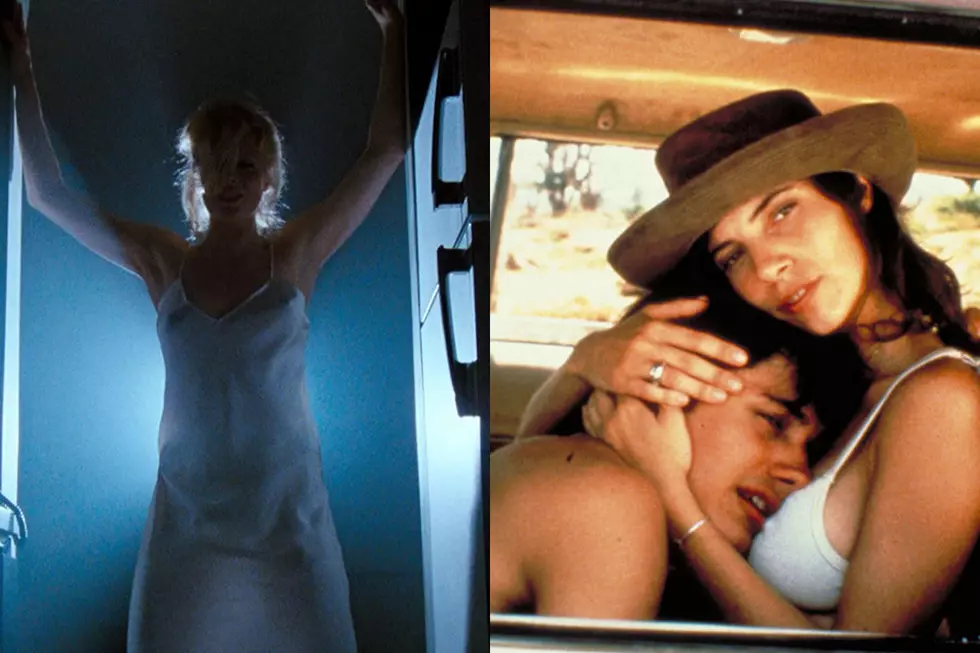
Somehow I made it through four years of high school, four years of college, and ten years since without ever reading Jack Kerouac's 'On the Road.' I'm not sure whether that makes me hopelessly unqualified to review the new movie adaptation of it -- because I can't tell you how faithful it is -- or better suited than most because I can judge the film as a film and not as a sacred cow of literature offered up for slaughter to the great, greedy god of cinema. And as a film, it feels like the CliffsNotes version of a great book; sketchy and incomplete. That's probably the film's destiny, too: to be watched by procrastinating teens the night before a big exam in lieu of reading the real thing.
If he hadn't already used that title for another movie, Tom Cruise could have easily called 'Jack Reacher' 'The Last Samurai.' There's a bit of Toshiro Mifune's Sanjuro in this Reacher guy: the masterless warrior who strides into a corrupt town, answers to no one, rights a few wrongs, busts a few heads, and wanders away to find his next challenge. He has no possessions; he owns exactly two shirts and one jacket. All he carries with him is a roll of $100 bills, a passport, a toothbrush, and his inflexible moral code. He would have fit right in back in feudal Japan. Or the Old West, for that matter. He'd make a hell of a Man With No Name.
Some good movies inspire endless repeat viewings. I've seen 'Citizen Kane' several dozen times; I've watched 'Ghostbusters' at least twice that. Then there are other good movies for which one viewing is enough for an entire lifetime. Films like 'Requiem For a Dream' and 'Salo, or the 120 Days of Sodom' are powerful works of art -- perhaps too powerful and too overwhelming in their depictions of death, misery and human cruelty to endure more than once. 'Amour,' the new film from Michael Haneke, falls into the latter category. I am glad I saw it -- and hope I never see it again.
The transition from ‘The 40-Year-Old Virgin’ to ‘This is 40’ has been an interesting one for Judd Apatow. After doing some really personal work on television’s ‘Freaks and Geeks’ -- and getting almost immediately cancelled when no one watched it -- he became a major name in cinematic comedy with the big, broad ‘Virgin,’ a film about a man trying to end decades of sexual starvation. He followed that up with ‘Knocked Up,’ about a young stoner who learns the perils of impregnating Katherine Heigl -- whose sister was played by Leslie Mann, Apatow’s real-life wife, and whose nieces were played by Maude and Iris Apatow, Apatow and Mann’s real-life daughters. While most of the movie was about Seth Rogen and Heigl’s wacky babywaiting shenanigans, there was that small percentage of observational family life comedy with Mann, the junior Apatows, and Paul Rudd, ostensibly playing Judd. It was some of the best stuff in the film, and it pointed the way forward.
His name is Django and as he's quick to point out, the D is silent. It's just about the only quiet part of Quentin Tarantino's 'Django Unchained,' a boisterous, bloody blaxploitation/Western hybrid. What else would you expect from Tarantino, the modern master of genre pastiche, flavorful dialogue, and grossly exaggerated violence? Whatever 'Django''s issues -- and it has a couple -- failing to deliver on its promises isn't one of them. If anything, the issue is the exact opposite.
Seconds into 'Deadfall,' the lives of two of the main characters are sent careening off course by a fluke accident. They are siblings Addison (Eric Bana) and Liza (Olivia Wilde), making a fast getaway from a casino robbery. They're driving down a snowy road when a deer darts in front of their car, smashing through the windshield and flipping the vehicle into the woods. If everything had gone according to plan, Addison and Liza would have escaped. Through sheer coincidence, they did not.
Bill Westenhofer. Lubo Hristov. David Lauer. Gullaume Rocheron. Depending on your beliefs, you may or may not believe that God created the heavens and earth in seven days -- but I can say with some certainty that those men, a quartet of visual effects supervisors and designers (along with many other talented people) created the wondrous sights of 'Life of Pi.' It took them a lot more than seven days, though.